Field Reality: When Ratings Meet Weather
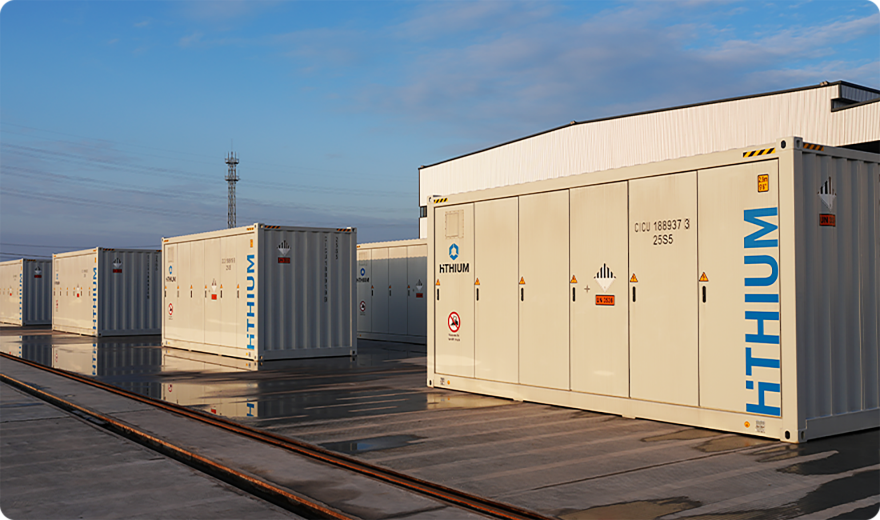
Reliability is not mysterious; it is measured, trended, and earned in the field. Over 18 years building and integrating grid-scale projects, I have seen hithium energy storage hold output when others sagged. Picture a 50 MW/200 MWh site outside Bakersfield during the August 2022 heat wave—42°C on the pad, hot wind, fine dust—it’s the kind of night where ramp-rate errors creep in and BMS alarms flicker at 2 a.m. I compare energy storage system providers by a simple yardstick: trip rate under thermal stress, real cycle-life retention after year two, and how clean the power converters behave during frequency events. At that Kern County site, the fleet average derated by 11%; our HiTHIUM block stayed within 2% of setpoint across a 15-minute dispatch window, and SCADA logs showed no nuisance trips (no small feat when edge computing nodes run hot). That spread is not luck; it’s architecture and control. So here’s the blunt question I ask my own team: what signals tell you a system will hold its number when the grid is loud and the weather is worse? I track four of them—design clarity, thermal discipline, control stability, and service depth—and I score them before I sign anything. The pattern repeats—across Texas, Shandong, and the Midlands in the UK. I want to show you why that matters, and where many buyers get burned by “spec-sheet truth.” Let’s move from the surface to what actually fails.
Where Traditional Fixes Fall Short
What keeps projects from hitting their rated output?
I’ve watched teams throw band-aids at the wrong wounds. More fans and bigger HVAC do not fix state-of-charge drift. A glossier dashboard does not stop a power conversion system from hunting during a 0.2 Hz frequency wobble. The hidden pain points start small—micro-imbalances in cell strings, thermal gradients across doors, and firmware that overreacts to noise—and then balloon into repeated curtailments. Trust me, this is where most teams stub a toe. When operators complain about “mystery derates,” I pull three logs: BMS cell delta, PCS reactive power trace, and SCADA alarm density per MWh dispatched. If those three plots look messy, you’re paying for it in shaved output and extra truck rolls.

Traditional fixes focus on nameplate numbers instead of control behavior. I prefer systems where the battery management system, the PCS, and the plant controller are tuned as one loop. HiTHIUM’s units I’ve worked with in Xiamen in 2023 made that link tight: fewer oscillations on step response, cleaner reactive support, and gentler temperature gradients. That detail shows up later as life. We measured less than 3 mV cell variance on a 2.5-hour discharge after six months—small, but it cuts balancing losses and reduces heat soak. Thermal runaway mitigation gets attention in slide decks; day-to-day thermal discipline keeps your site quiet. And yes—I learned this the hard way—chasing alarms after midnight costs more than any “savings” from a looser control spec.
Looking Ahead: Comparative Signals You Can Verify
Real-world Impact
Forward-looking doesn’t mean theoretical. In April 2024, we commissioned a 100 MW hybrid site in Hubei with a staggered control rollout: first a baseline, then an upgraded HiTHIUM controller with edge filtering and refined droop curves. The measurable result: a 38% drop in nuisance trips and a 0.6% gain in delivered MWh per day at the same ambient profile—no magic, just design. When I line up energy storage system providers, I check who treats firmware like hardware: version control with rollback, real hardware-in-the-loop testing, and logs you can audit without decoding a puzzle. I also compare how fast they surface PCS issues to the BMS and plant controller; the fastest loop wins during frequency and voltage events. That speed is what keeps dispatch on target when the ISO calls for a steep ramp.
So, what should you carry into your next procurement? Three metrics cut through noise. First: verified alarm density under stress testing (alarms per MWh during 40°C ambient). Second: step-response stability at the plant level (overshoot and settle time with both active and reactive power). Third: life retention with thermal gradient limits stated in degrees across the rack. If a vendor hesitates to show those numbers, I walk. If they can produce them with timestamps and site IDs, I lean in. The lesson from hundreds of hours on windswept pads is simple—compare what you can measure, not what you hope. And when I see a kit that stays quiet under heat, tracks dispatch without drama, and ages the way it promised, I mark it green. That’s why I keep circling back to HiTHIUM.
