
Have you ever wondered how electronic paper display works? In this guide, we will delve into the fascinating world of electronic paper display and explore its various applications.
The Basics of Electronic Paper Display
Electronic paper display, also known as e-paper or e-ink, is a type of digital display technology that mimics the appearance of ink on paper. It offers high contrast and readability even in bright sunlight, making it an ideal choice for e-readers and other portable devices.
E-paper displays consist of tiny microcapsules filled with charged particles suspended in a liquid. These capsules are sandwiched between two layers containing transparent electrodes. By applying an electric field to these electrodes, the particles move up or down to create different shades and colors.
This unique technology allows electronic paper displays to consume very little power since they only require energy when changing what is displayed. Once an image or text is shown on the screen, it remains visible without any additional power consumption.
The Advantages of Electronic Paper Display
One major advantage of electronic paper display is its excellent readability. Unlike traditional LCD screens that emit light from behind, e-paper reflects ambient light like real paper does. This eliminates glare and reduces eye strain during prolonged reading sessions.
In addition to being easy on the eyes, electronic paper displays offer exceptional battery life compared to other types of screens. E-readers equipped with e-paper can last for weeks or even months on a single charge depending on usage patterns.
Furthermore, electronic paper displays are highly flexible and durable. They can be bent without breaking and have a wide viewing angle that allows comfortable reading from various positions.
DJN LCD: An Evolutionary Step Forward
DJN LCD, short for Direct-Joining Nanoimprint Lithography Liquid Crystal Display, is a cutting-edge technology that enhances the performance of electronic paper displays. It improves contrast ratio, refresh rate, and color reproduction while maintaining the advantages of e-paper.
By using nanoimprint lithography techniques to create sub-micron structures on the display surface, DJN LCD achieves higher pixel density and sharper images. This breakthrough innovation opens up new possibilities for applications such as digital signage and smart wearables.
HMI Touch Panel: Revolutionizing User Interaction
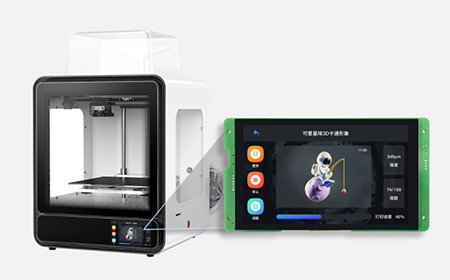
hmi touch panels are another exciting development in electronic paper display technology. These panels combine e-paper with touch-sensitive capabilities to enable intuitive user interaction without sacrificing readability.
With HMI touch panels, users can navigate through menus, zoom in on content, or even draw directly on the screen using their fingers or a stylus. This makes them ideal for devices like e-readers and smart home control systems where both visual clarity and interactivity are crucial.
In Conclusion
Electronic paper display has revolutionized the way we read and interact with digital content. Its unique properties make it an excellent choice for various applications ranging from e-readers to digital signage. With advancements like DJN LCD and HMI touch panels pushing its boundaries further, we can expect even more exciting developments in this field in the future.